How to Read Breakout Failure in Replay
Read breakout failure in replay without hindsight, what to check before fading the move, and how acceptance and reclaim shape the read.
Key Takeaways
- Breakout failure is easier to learn in replay because the decision point can be frozen before the rejection is obvious.
- The key filter is not the break itself but whether price accepts beyond the level.
- Most bad reads happen when traders treat one impulse candle as full confirmation.
- A good journal note should name whether the miss came from weak acceptance, late reaction, or context mismatch.
Breakout failure is one of the best setups to practice in replay because it punishes lazy confirmation logic fast. The break looks convincing, the trader commits emotionally, and then price slips back through the level before the move ever becomes sustainable.
Replay is useful here because it freezes the exact moment when the chart still looks ambiguous. That is the part most traders need to train, not the hindsight screenshot after the failure already happened.
This setup is also one of the easiest to romanticize after the fact. The chart makes the trap look obvious later. The real work is learning how to spot weak acceptance while the breakout still feels believable.
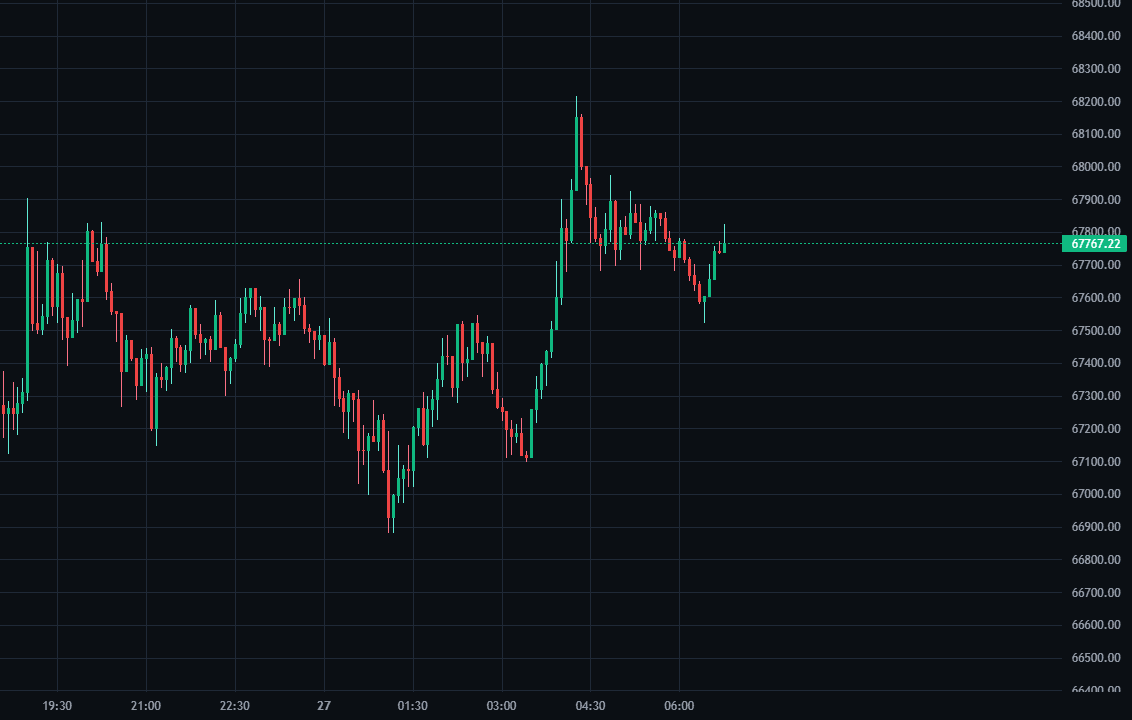
What breakout failure actually looks like
The setup is not just price broke a level and came back. A cleaner failed breakout usually includes:
- a visible level that traders are clearly watching
- an initial push through that level
- weak follow-through or fast rejection after the push
- re-entry back into the prior range
The most important part is acceptance. If price cannot stay above the breakout level or below the breakdown level, the move is often telling you that the market was not ready to continue.
The cleanest failed breakout logic
One of the most useful ways to frame a failed breakout trading setup is:
- level breaks
- continuation does not gain acceptance
- price rotates back through the level
- the market proves that the breakout crowd was too early
That is a much better mental model than simply saying “the breakout failed.” It forces you to look at holding quality, not just the initial push.
What to watch before you call the fade
A replay question becomes much better when you ask a narrower thing:
Does this break actually have acceptance, or is it about to fail?
That keeps the read focused on a real price-action problem instead of a generic buy-or-sell feeling.
A simple replay workflow for failed breakouts
Practice workflow
Failed breakout replay workflow
- Pause the chart just after the break starts to look convincing.
- Mark the level that was broken and ask whether price is accepting beyond it.
- Watch the next candles for hold, reclaim, or rotation back into range.
- Journal whether the miss came from weak acceptance, bad context, or late confirmation.
Failed breakout versus breakout retest
These two setups are easy to blur together:
- breakout retest means the new area holds and continuation resumes
- breakout failure means the new area does not hold and price rotates back
That difference is why it helps to study this page next to Breakout Retest Trading Setup Guide. The best replay sessions are often the ones where you compare those two paths on similar charts.
The three mistakes traders repeat here
Most failed-breakout mistakes fall into one of these buckets:
-
Confusing impulse with confirmation
One strong candle through the level is not enough on its own. -
Ignoring the reclaim
Once price slips back inside the prior range, the continuation idea is much weaker. -
Trading the level without context
A breakout against higher-timeframe pressure or inside messy overlap is harder to trust.
How to journal this better
A better journal note after a failed breakout usually includes:
- the level that failed
- whether acceptance was missing or weak
- whether the reclaim happened immediately or slowly
- what the next session should filter more aggressively
That kind of note makes the next replay block stronger because it ties the miss to a specific read problem, not just a bad feeling.
What to write in the journal after the replay
A weak note says:
Breakout was fake
A useful note says:
Break had impulse, but no hold above the level. Price reclaimed the range on the next sequence. Need to wait for acceptance before calling continuation.
That kind of note can actually change the next session.
Review checklist
Breakout failure review checklist
- Did the break hold beyond the level or fail immediately?
- Was there clean follow-through after the initial push?
- Did price reclaim the broken level quickly?
- Was the miss caused by weak acceptance, poor context, or late reaction?
Where this setup fits in the wider cluster
This page works best as a support guide to:
- How to Practice Price Action Trading
- Breakout Retest Trading Setup Guide
- Liquidity Sweep Trading Example
Those pages help you separate three similar-looking ideas:
- real continuation
- breakout retest
- failed breakout / fake acceptance
That separation matters because traders often blur all three together when reviewing quickly.
Bottom line
The fastest way to learn breakout failure is to stop studying the final rejection candle and start studying the acceptance problem earlier in the sequence. Replay gives you that exact training environment: a believable chart, a real decision point, and a clean reveal that tells you whether the break actually held.
Next step
Replay price action setups inside SkillCandle
Move from reading about the setup to actually practicing it with a partial chart, replay reveal, and tracked review notes.
FAQ
Questions traders ask about this topic
What is a breakout failure?
A breakout failure happens when price pushes through a level but cannot hold acceptance above or below it, then rotates back through the range.
Why is breakout failure hard to practice live?
It is hard because the chart often looks convincing at the moment of the break, and traders only realize it failed after the reversal becomes obvious.
What should I review after a failed breakout read?
Review whether the break had real displacement, whether acceptance held after the push, and whether you confused impulse with confirmation.
What confirms a fake breakout?
A fake breakout usually becomes clearer when price cannot hold acceptance beyond the level and quickly rotates back into the prior range with intent.
Related Reads
Keep building the cluster
Breakout Retest Trading Setup Guide
Practise breakout retests in replay and learn whether a retest is constructive or already losing acceptance, with fewer false-breakout mistakes.
How to Practice Price Action Trading
A crypto-first framework for practicing price action trading with replay, setup clustering, and review loops instead of random screen time.
Liquidity Sweep Candle Example
Learn how to read a liquidity sweep candle with replay-based review points so you stop mistaking every wick for a real sweep reversal.
Order Block Trading Strategy Practice
A practice-first guide to order block trading, covering what to review in replay and how to tighten invalidation around displacement and retests.