Candlestick Pattern Practice for Beginners
Candlestick practice for beginners should train context and decisions rather than pattern names. How to use replay without memorisation traps.
Key Takeaways
- Beginners should practice a small pattern set instead of memorizing everything at once.
- Candlestick patterns only matter when structure and invalidation are clear.
- Replay is better than static screenshots for honest pattern practice.
- Pattern practice should end with review notes, not just another chart.
If you are looking for candlestick pattern practice for beginners, the biggest trap is thinking the job is memorization.
It is not.
Good practice reading candlestick charts is about context, timing, and invalidation before the answer appears.
Useful candlestick practice teaches you how to answer harder questions:
- What is this candle confirming?
- What structure is it sitting inside?
- What would invalidate the read immediately?
- Is this a real pattern or just a shape I want to believe?
That is why beginners usually improve faster with replay than with static screenshots. The future is still hidden, so the pattern has to make sense before the answer appears.
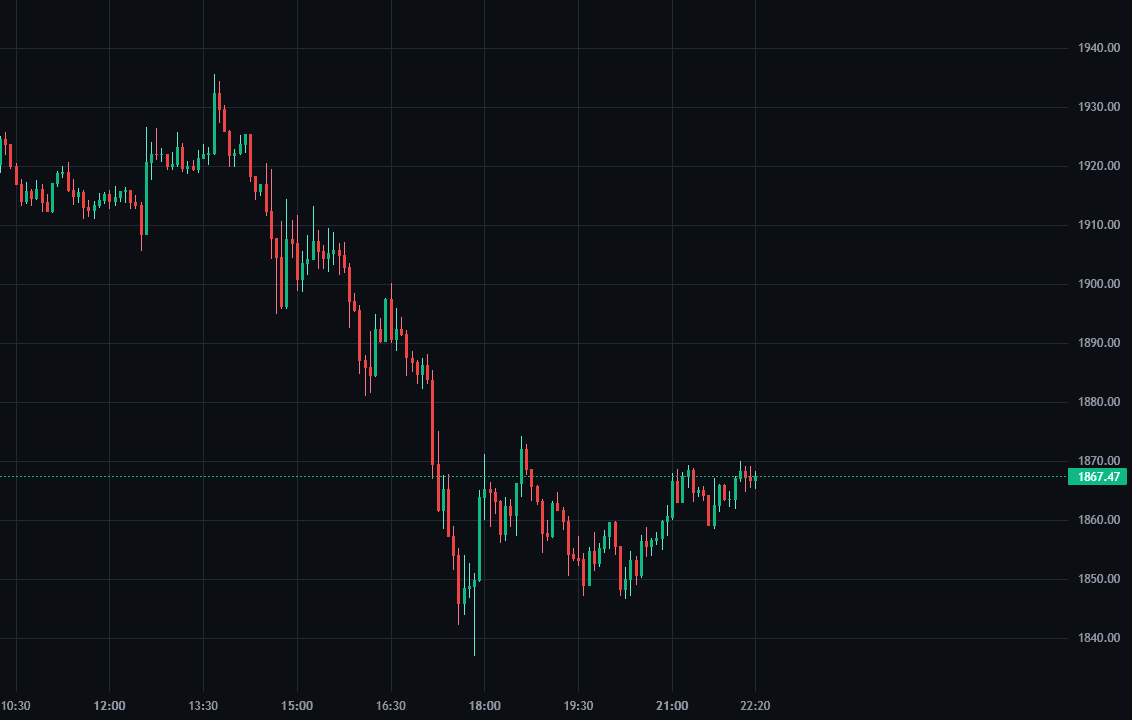
Start with fewer patterns, not more
Most beginners try to memorize every named formation they can find. That creates noise.
Start with a much smaller set:
- rejection at a key level
- continuation candle after structure holds
- failed breakout candle
- reclaim or acceptance after a sweep
Those are easier to connect to real context than a giant list of pattern names.
If you want the broader decision-quality version of this topic, read How to Train Candlestick Decision Making.
How to practice candlestick patterns the right way
The goal is not to identify the candle after the market finishes moving. The goal is to read what the candle is doing while the answer is still unknown.
Practice workflow
Candlestick pattern practice loop
- Choose one pattern family or one setup type for the session.
- Open a partial chart and identify the structure before looking only at the latest candle.
- Write what the candle is confirming, rejecting, or failing to prove.
- Commit to the read before the next candles print.
- Review whether the pattern worked because of real context or whether it was weak from the start.
This is why replay works so well for candle reading. It forces timing and context back into the process.
What beginners should actually look for
A candle pattern matters more when these things line up:
- the location makes sense
- the move has room to continue or reject
- the invalidation is clear
- the pattern fits the broader structure instead of fighting it
That is also why many candle patterns fail in beginner journals: the candle looked exciting, but the context never supported the idea.
Replay beats static screenshots for pattern training
Static pattern guides make everything look neat. Replay shows whether the pattern was genuinely readable in sequence.
That helps you catch:
- entries that were too early
- patterns that formed inside bad structure
- candles that looked strong but lacked follow-through
- repeated misreads you only notice after several sessions
If you want the wider price-action workflow, continue with How to Practice Price Action Trading.
Common beginner mistakes in candlestick practice
Review checklist
Avoid these candlestick practice mistakes
- Do not memorize patterns without studying the structure around them.
- Do not practice ten pattern names at the same time.
- Do not call every strong candle a continuation setup.
- Do not skip review just because the pattern looked obvious after the move.
Those mistakes are why beginners often feel like they are studying candles but still cannot use them when the chart is live.
A simple weekly pattern-practice routine
Here is a cleaner beginner structure:
Day 1: one pattern family on one marketDay 2: same pattern family on a second marketDay 3: review the repeated missDay 4: run a short mixed replay blockDay 5: write one correction rule for the next week
That rhythm is more useful than trying to cram every candlestick lesson into one long session.
Bottom line
Candlestick pattern practice for beginners should train context and decision quality, not just recognition. Use replay, keep the pattern set small, and review the misses until the same weak reads stop repeating.
Next step
Replay price action setups inside SkillCandle
Move from reading about the setup to actually practicing it with a partial chart, replay reveal, and tracked review notes.
FAQ
Questions traders ask about this topic
What is the best way to practice candlestick patterns?
The best way is to practice them in context with replay, where you must make a read before the next candles reveal whether the pattern really worked.
Should beginners memorize dozens of candlestick patterns?
No. Beginners improve faster by practicing a small set of useful patterns and learning what structure, momentum, and invalidation make them meaningful.
Why do candlestick patterns feel easy in hindsight?
Static charts make patterns look obvious after the move is finished. Replay removes that hindsight advantage and shows whether the read was actually clear in real time.
Related Reads
Keep building the cluster
How to Train Candlestick Decision Making
A replay-based guide to training candlestick decision making without falling into pattern memorization, hindsight, or random chart scrolling.
How to Practice Price Action Trading
A crypto-first framework for practicing price action trading with replay, setup clustering, and review loops instead of random screen time.
Price Action Drills for New Traders
Simple replay-based price action drills for new traders, using one setup, one market, and a review loop you can repeat every session.
How to Practice Trading Without Real Money [Updated 2026]
Paper trading, broker demos and market replay compared, plus a 20-minute workflow to build chart skill before going live.